Home › Asphalt Pathways, Sidewalks, and Trails
Create accessible connections with asphalt pathway paving in Boise, ID. We install and repair sidewalks, multi use trails, and bike paths for campuses, parks, and communities. Our team focuses on smooth transitions, proper slopes, and drainage for safe use. Contact us to plan your next asphalt path or trail project.
Precision Asphalt Boise provides professional asphalt pathway paving throughout Boise, ID, ID and the surrounding area. Our licensed, insured crew delivers safe, clean, on-time work with a free estimate before anything begins. Call (208) 783-3122 or request your free quote.
Asphalt Pathways, Sidewalks, and Trails in Boise
If you are looking to connect parts of your property with a smooth, clean walkway, asphalt pathway paving is often the most practical and budget friendly option in Boise. Precision Asphalt Boise builds and repairs asphalt pathways, sidewalks, and walking trails for homes, HOAs, apartments, businesses, and local facilities across the Treasure Valley.
Boise properties range from older North End homes with narrow side yards to newer subdivisions in Meridian and Kuna with wide greenbelts and community paths. Each type of property needs a different approach. On older lots we are careful around existing trees, irrigation lines, and uneven grades. In newer builds we often tie into concrete porches, curbs, and community trail systems so the new asphalt pathway looks like it was planned from the start, not tacked on later.
Our crew handles small projects, such as a 50 foot side yard walkway to trash cans, as well as larger jobs like mile long HOA trails around retention ponds or along the Boise Bench. We focus on building paths that are comfortable to walk on in all seasons, handle sprinkler overspray and snow melt, and stand up to regular use by people, strollers, golf carts, and light maintenance vehicles where allowed.
How We Design Your Asphalt Pathway or Trail
Good asphalt pathway paving starts with layout and drainage, not with the paving machine. When we visit your Boise property, we walk the route with you and look at how people already move through the space. For example, if tenants have worn a dirt path between the parking lot and mailboxes, we use that natural desire path as our baseline alignment.
We check slopes with a level to make sure water will shed off the walkway instead of pooling in low spots that become ice in winter. In older Boise neighborhoods with flood irrigation we pay close attention to how water flows through yards and we may recommend shallow swales or small catch basins next to the path so the asphalt stays dry and intact.
You can choose different widths based on use. For simple residential sidewalks, 3 to 4 feet is common. For community pathways that see bikes and strollers, 6 to 8 feet is more comfortable. For maintenance access in larger complexes, we may go 10 feet or more so a small utility cart can pass without breaking up the edges.
Edge options matter too. Some owners want clean, straight machine cut edges that blend into lawn. Others prefer concrete ribbon curbs or mow strips on one or both sides of the asphalt for a crisp look and easier mowing. Where paths tie into concrete driveways or city sidewalks, we set our asphalt thickness to match the existing surface so there is no toe catching lip.
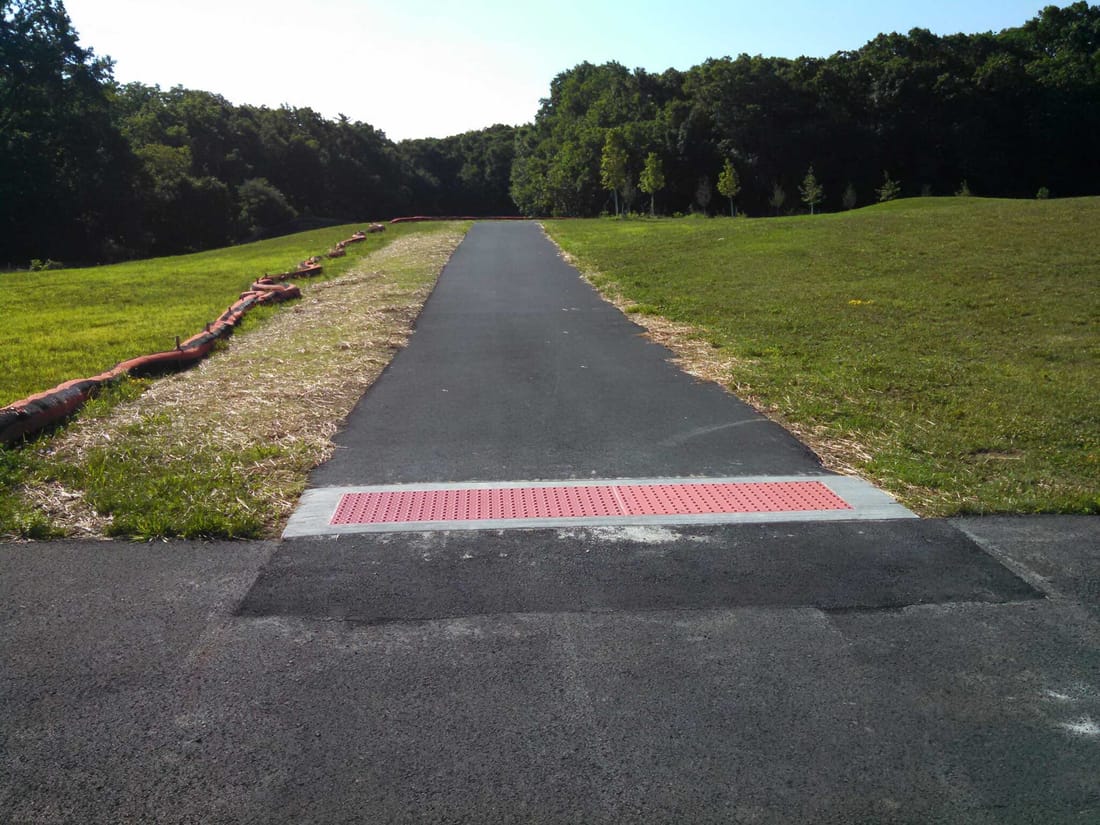
If accessibility is a concern, we design slopes and transitions to meet ADA guidelines where practical. That includes gentle approach slopes, smooth transitions at street crossings, and enough width for wheelchairs to pass where required, especially for public facilities, churches, and multi family housing in Boise.
Our Asphalt Pathway Paving Process
Once the layout is set, Precision Asphalt Boise follows a step by step process that keeps disruption to your property low while building a long lasting walkway.
1) Site prep and excavation. We strip sod, remove loose soil, and cut out any existing gravel or broken concrete along the planned route. In much of Boise the upper soil can be powdery and weak in summer, so for pathways we typically excavate 4 to 8 inches, depending on expected use. Areas that will see golf carts or small utility vehicles get deeper excavation and a heavier base.
2) Subgrade compaction. The native soil is graded to the right slope, then compacted with a plate compactor or roller. In pockets of soft or saturated ground, which are common near yard drains or downspouts, we may undercut and replace with better material or use a geotextile fabric to separate the weak soil from the gravel base.
3) Base rock installation. We install a layer of crushed gravel, usually 3/4 inch minus from local Idaho pits, then grade and compact it to final elevation. For standard residential walkways, 3 to 4 inches of compacted base is typical. For HOA trails and access paths, we may recommend 6 inches or more. A well built base is the main difference between a path that lasts 20 years and one that breaks up after a few freeze thaw cycles.
4) Asphalt placement. We generally install 2 to 3 inches of hot mix asphalt for paths, depending on use and budget. Smaller pathways may be paved by hand with asphalt rakes and compacted with a plate tamper. Longer or wider trails are usually placed with a small paver for a smoother and more consistent surface. We time the work around weather, since Boise mornings can be cool and afternoons hot, and we want the mix to compact properly before it cools.
5) Compaction and finishing. After placement, we compact the asphalt with a roller and tamp edges to remove air pockets and secure the sides. We pay attention to transitions at driveways, patios, and existing pathways so there are no trip hazards. Any loose material along the edges is raked back and graded so lawn or landscape rock can be brought right up to the path.
6) Clean up and walk through. We sweep the area, remove spoils, and walk the finished pathway with you. We explain when you can walk, roll trash cans, or drive carts on it, and we point out where downspouts or sprinklers might need adjustment to keep water from undermining the edges over time.
Costs, Common Issues, and How We Prevent Problems
Customers usually want to know what drives the price of asphalt pathway paving. In Boise, the main factors are total length and width, how much excavation and base rock are needed, how accessible the work area is, and whether tree roots or utilities are involved.
If we can back our equipment close to the work area, such as along a side yard, the job goes faster and costs less. Tight backyards with narrow gates may require more hand work and wheelbarrow hauling, which adds labor. Steep slopes on the Foothills or around the rim of the Bench often call for more grading and erosion control.
Tree roots are a common concern in older Boise neighborhoods with mature maples and elms. If a root is close to the surface, it will eventually lift the path if we simply pave over it. We look for root zones during layout. When needed, we adjust the alignment slightly, install a thicker gravel section to bridge over roots, or discuss selective root pruning with the understanding that an arborist may be needed for large or critical trees.
Water issues cause many of the cracks and low spots people call us to fix. Sprinklers that constantly soak one edge of a path weaken the base, and poor drainage leaves puddles that freeze and expand. We correct these by reshaping the grade, adding more base rock, or installing small drains. Where it makes sense, we also suggest minor sprinkler relocations so the asphalt is not in the direct spray pattern.
For existing cracked or alligator patterned asphalt paths, we inspect the base before recommending repairs. In some cases, milling or overlaying with 1.5 to 2 inches of new asphalt is enough. In others, especially where the underlying gravel has pumped and shifted, full depth removal and replacement is the better long term fix. We are straightforward about what will hold up and what is just a short term patch so you can decide how much to invest.
Boise freeze thaw cycles and summer heat can be tough on any pavement. That is why we generally recommend a quality sealer after the first season on higher use pathways and every few years after that. Sealing helps resist water and UV damage. We also suggest simple maintenance like keeping edges trimmed so roots and grass do not push into the asphalt, and sweeping off deicer residue in spring if the path is shoveled in winter.
Why Work With Precision Asphalt Boise for Your Path or Trail
A pathway or sidewalk should feel like a natural part of your property, not an afterthought. Precision Asphalt Boise focuses on the small details that make these projects fit the way you actually live and work on your site. That includes where kids cut through to the bus stop, how residents reach mail kiosks, and how maintenance staff move equipment around without rutting lawns.
Because we work all over the Boise area, we are familiar with local standards. If your path needs to tie into a city sidewalk or public right of way, we coordinate slopes and elevations to keep everything consistent. For HOAs, we help boards compare design options and maintenance expectations so you can choose the right balance between cost and longevity.
Communication is a big part of our process. Before we start paving, you will know how long the work will take, which entrances or gates will be affected, and exactly when you can start using the path again. On apartment and commercial projects, we can phase work to maintain safe access to doors and common areas so residents and customers are not left guessing.
If you are considering asphalt pathway paving anywhere in Boise or nearby communities, we are happy to walk the route with you, point out potential issues, and provide a clear written estimate. You will get a straightforward explanation of what we recommend, what it will cost, and how long it should last in our local conditions so you can make an informed decision.