Home › Asphalt Resurfacing & Overlays
Refresh your driveway with asphalt resurfacing in Boise, ID instead of a full replacement. We repair major defects, then install a smooth asphalt overlay that looks like new. This process can extend the life of your existing pavement at a lower cost. Schedule an on site resurfacing evaluation and free estimate today.
Precision Asphalt Boise provides professional asphalt resurfacing throughout Boise, ID, ID and the surrounding area. Our licensed, insured crew delivers safe, clean, on-time work with a free estimate before anything begins. Call (208) 783-3122 or request your free quote.
Asphalt Resurfacing & Overlays for Boise Properties
When your driveway or parking lot is cracked, faded, and rough but the base is still solid, asphalt resurfacing is often the most cost‑effective way to restore it. Precision Asphalt Boise provides asphalt resurfacing and overlays tailored to Treasure Valley conditions, so your pavement stands up to hot summers, freeze‑thaw cycles, and regular snow removal.
Resurfacing means adding a new layer of asphalt over your existing pavement after it has been repaired and prepared. You get a fresh, smooth driving surface without paying for a full tear‑out and replacement. For many Boise, Meridian, and Kuna properties, this extends pavement life by 8 to 15 years when done correctly and at the right time.
Our crew focuses on practical details that matter in the Boise area, like controlling drainage so meltwater does not pool and refreeze, selecting mix designs that tolerate temperature swings, and coordinating work with your business hours or HOA restrictions so disruption is minimal.
Is Asphalt Resurfacing Right for Your Pavement?
Not every worn surface is a good candidate for an overlay, and an honest evaluation upfront saves you money and frustration. Precision Asphalt Boise starts with a site visit where we walk your pavement, check for soft spots, and look at the pattern of cracks.
Resurfacing is usually appropriate when:
• The surface shows alligator cracking only in limited areas, not across most of the lot.
• There are some potholes or localized failures, but the base underneath is still firm when probed or driven over.
• The pavement is 10 to 20 years old but has not had major structural problems, flooding, or repeated patch failures.
• Drainage can be corrected through leveling and milling, not full regrading.
We will likely advise against an overlay if you have extensive base failure, constant standing water, or major root damage from nearby trees. In those cases, removing and rebuilding sections or doing a full reconstruction is usually smarter. Our goal is to recommend resurfacing only when it will realistically give you a good return and at least several more serviceable years.
Step‑by‑Step: How Our Asphalt Resurfacing Process Works
Our resurfacing work follows a clear sequence so the new overlay bonds properly and performs as long as possible in Boise conditions.
1. Inspection and measurements. We verify existing thickness, check slopes with a level or laser, and note where water currently collects. We also measure square footage precisely so we can estimate material quantities and cost accurately.
2. Cleaning and surface prep. We remove weeds, loose aggregate, and debris using power brooms and blowers. Oil‑soaked areas near dumpsters or loading zones are treated or cut out because oil contamination prevents proper bonding.
3. Structural repairs. Potholes, deep cracks, and localized failures are sawcut or milled out, then patched with hot mix asphalt. Large alligatored areas are removed and replaced rather than simply covered. This step is critical so the new surface does not mirror those defects within a year or two.
4. Milling and leveling. Where the existing surface is too high at transitions (like garage entries, sidewalks, or street tie‑ins), we mill down the old asphalt to create a smooth connection. We also use leveling courses to correct dips or birdbaths that currently hold water.
5. Tack coat application. We spray a tack coat, a thin layer of asphalt emulsion, over the prepared surface. This works like glue between the old pavement and the new overlay so they move together through seasonal temperature swings.
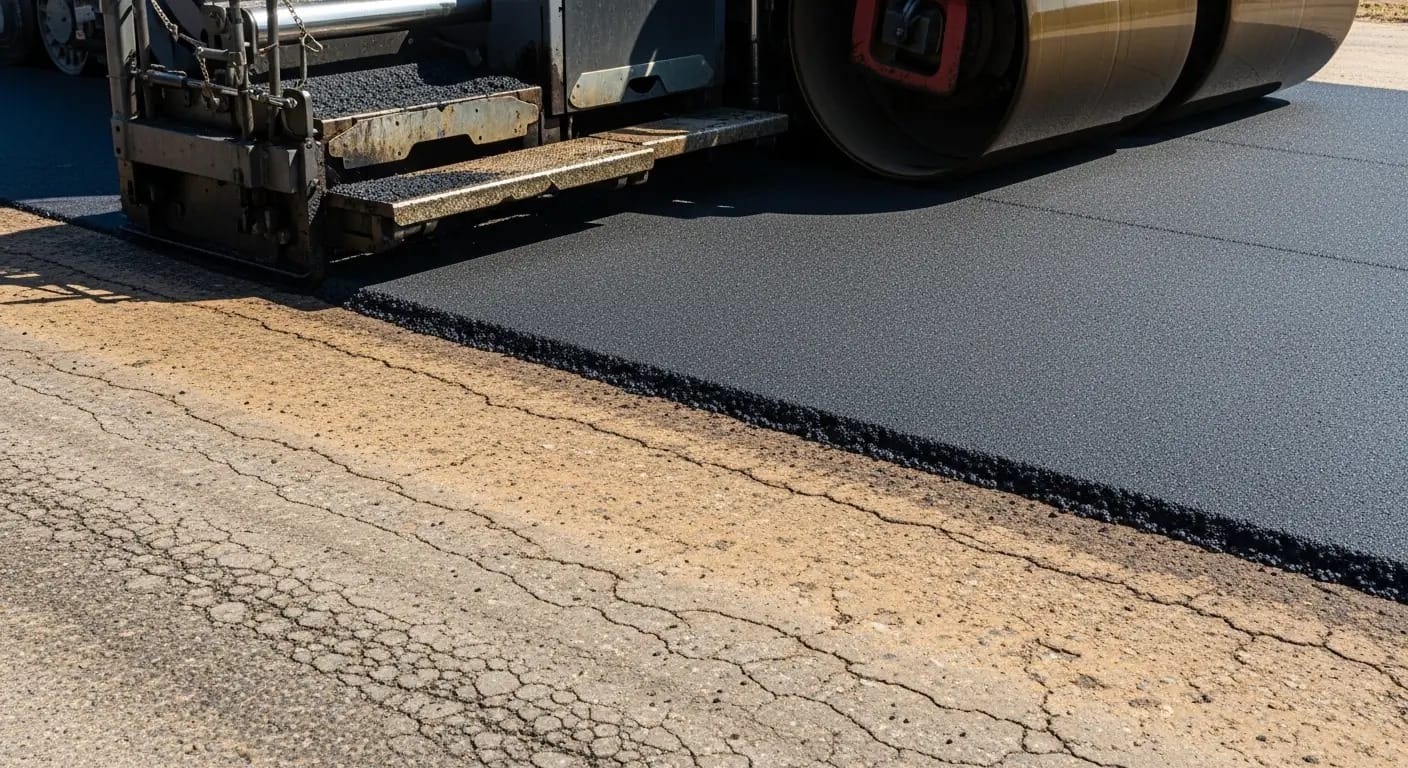
6. Laying the new asphalt surface. Hot mix asphalt is delivered from a local plant, usually within 20 to 40 minutes of production to maintain temperature. We place it with a self‑propelled paver for even thickness, then compact it using steel‑drum and pneumatic rollers in multiple passes.
7. Joints and finishing. At tie‑ins to existing surfaces, we feather edges so there are no abrupt bumps. We also check that water flows correctly to drains or edges, making small adjustments before final compaction.
8. Striping and cleanup. For commercial lots, we return once the surface has cooled to re‑stripe parking stalls, ADA spaces, and directional markings. We leave your site swept and usable, with cones or tape where needed until the first day of traffic.
Material Options and Thickness Choices for Boise Weather
Not every overlay uses the same mix or thickness. Precision Asphalt Boise selects materials based on how you use the surface and how much weight it carries.
For residential driveways, resurfacings are typically 1.5 to 2 inches compacted thickness. This is enough to refresh the surface and correct moderate imperfections, while staying under thresholds that might interfere with garage clearances or city sidewalk elevations.
For commercial parking lots or drive lanes that see delivery trucks and garbage trucks, we usually recommend 2 to 2.5 inches. In heavier use loading areas, we may specify a stronger base repair plus a thicker overlay or a different aggregate blend to resist rutting and shoving under slow, turning traffic.
We use Idaho‑appropriate hot mix designs that balance flexibility (to handle Boise’s winter and spring freeze‑thaw cycles) with surface hardness (to resist scuffing from tight vehicle turns). For steep driveways in the foothills or areas with frequent snowplow contact, we discuss finish texture so the surface has enough micro‑texture for traction without being overly rough.
If you have specific needs, such as low noise near homes or extra oil resistance near restaurants or fueling areas, we can adjust mix types and recommend sealcoating schedules that match real‑world use.
What Drives the Cost of Asphalt Resurfacing in Boise
Customers often ask why two similar‑sized projects can have different prices. Several local and site‑specific factors affect the cost of asphalt resurfacing in Boise.
1. Existing condition. Extensive patching, milling, or base stabilization increases labor and material hours. A surface that only needs minor crack repairs and a simple overlay costs less than one with many failed areas and drainage issues.
2. Overlay thickness and mix type. Thicker overlays and specialty mixes use more asphalt per square foot. Commercial truck traffic, for example, usually requires more robust designs than a small residential driveway.
3. Access and layout. Large open lots are more efficient to pave than small, cut‑up areas with islands, loading docks, or tight corners. In Boise’s older neighborhoods with narrow alleys or steep drives, extra time may be needed to maneuver equipment and trucks safely.
4. Traffic control and phasing. If your business needs to stay open, we may phase work so customers always have a way in and out. This can increase overall duration and cost but keeps your operation running.
5. Timing and plant distance. Asphalt is priced partly by oil markets and haul distance. Most Boise projects are served from nearby plants, but long hauls or off‑hour work (night or early morning to avoid peak traffic) can affect cost.
We provide written proposals that break out major cost drivers: square footage, overlay thickness, patching quantities, and striping, so you can see exactly what you are paying for and where there may be options to adjust scope to your budget.
Local Considerations: Drainage, HOAs, and City Requirements
Boise’s climate and local rules shape how resurfacing should be planned. Our team at Precision Asphalt Boise is familiar with typical HOA expectations, city standards, and what actually causes problems here over time.
Drainage is one of the most important issues. If your current pavement has standing water after storms or snowmelt, we address it before adding an overlay. Sometimes that means targeted milling to create gentle slopes toward the street or catch basins. In severe cases, we may recommend adding drains rather than simply raising the surface.
Many HOAs in Boise, Meridian, and Eagle require advance notice for asphalt work, restrictions on parking during certain hours, and adherence to certain colors and striping layouts. We can provide scope descriptions and schedules you can share with your HOA board to speed up approvals.
For commercial properties, large resurfacing projects may trigger review of ADA parking compliance and access routes. While overlays themselves usually do not require full engineering or city permits, changes to drainage structures or grades sometimes do. We help you identify when an engineer or city review is needed and coordinate with your facility or property manager.
Snow and ice management is another local factor. We design overlays to minimize low spots that become ice patches, and we can advise your plow contractor on edge heights and any areas that need extra care to avoid gouging the new surface.
What to Expect Before, During, and After Your Overlay
Good communication makes resurfacing smoother for everyone using your property. Here is how working with Precision Asphalt Boise typically goes.
Before work starts, we schedule a walkthrough to confirm scope, staging areas, and where trucks will enter and exit. For businesses, we discuss your busy times and plan phases that keep customer access open when you need it. For homeowners, we coordinate around trash pickup days and neighborhood parking constraints.
During the project, you can expect some noise from milling and compacting equipment and periodic truck traffic. We post or provide parking and access instructions ahead of time, including which areas will be off limits and for how long. Our crew sets cones and barricades so drivers do not accidentally enter fresh pavement.
After paving, most overlays in typical Boise summer weather can handle foot traffic within a few hours and vehicle traffic within 24 hours, depending on temperature and thickness. In cooler shoulder seasons, we may recommend slightly longer cure times. We advise waiting before turning steering wheels while stationary to avoid scuffing, especially on hot afternoons in the first few days.
We also discuss a maintenance plan. In this climate, crack sealing and periodic sealcoating can significantly extend the life of your new asphalt resurfacing. We let you know what to watch for, like new cracks or drainage changes, so small issues can be handled early before they become structural problems.