Home › Asphalt Striping and Pavement Markings
Improve traffic flow and safety with professional asphalt striping in Boise, ID. We design and paint parking stall lines, arrows, ADA spaces, fire lanes, and custom pavement markings. Our team uses high visibility paints for sharp, long lasting lines. Schedule new layout or restriping for your property today.
Precision Asphalt Boise provides professional asphalt striping throughout Boise, ID, ID and the surrounding area. Our licensed, insured crew delivers safe, clean, on-time work with a free estimate before anything begins. Call (208) 783-3122 or request your free quote.
Asphalt Striping in Boise That Actually Works for Daily Traffic
Asphalt striping is not just paint on pavement. In Boise it is the difference between an organized lot that flows well and a daily headache of confusion and fender benders. Precision Asphalt Boise focuses on striping layouts that match how people really drive, park, and walk in this area, from busy retail centers on Eagle Road to tight Old Boise lots.
We start every asphalt striping job by walking the site with you and looking at how your lot is being used right now. We look for conflict points, like people cutting across rows, unclear entrances, or loading trucks blocking parked cars. For many Boise properties, the goal is to keep traffic moving safely during winter when visibility is reduced and surfaces can be slick.
We also check current line visibility in both daylight and at night. A lot of older lots still have faint layouts hiding under newer striping, which can be confusing when it rains or snows. Precision Asphalt Boise will decide with you whether to follow the existing layout, correct it, or completely reconfigure it to meet current city and ADA requirements.
Our Step-by-Step Asphalt Striping Process
A clean surface is critical. Before any asphalt striping, we mechanically sweep the pavement and use backpack blowers to remove dust, pine needles, gravel, and trash. On oily or heavily stained areas, especially common near drive‑throughs and dumpsters, we will spot clean or degrease so the paint bonds and does not peel within a season.
Next, we measure and snap control lines with chalk to keep long runs perfectly straight. For re-stripes where the old layout is still visible, we align carefully so the new lines land exactly on top of the old to avoid ghosting. If the existing layout is changing, we will lay out the new pattern with tape or chalk and walk it with you before we ever open a paint can.
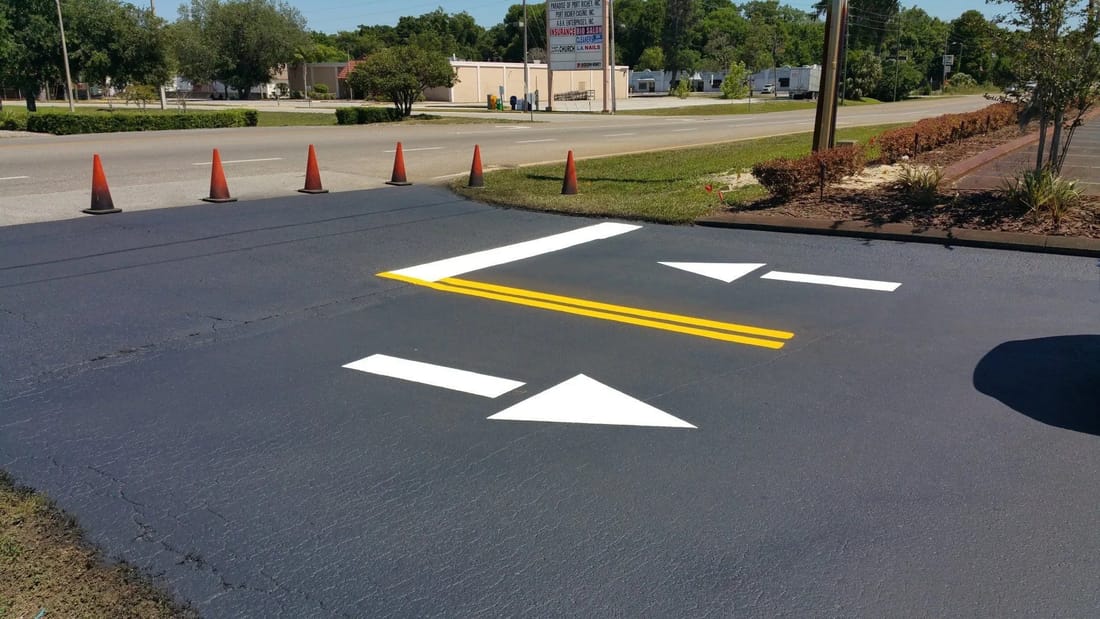
We use professional airless striping machines to apply paint at the correct mil thickness, usually in one or two passes depending on color and coverage. For critical markings such as ADA stalls, crosswalks, arrows, and fire lanes, we use heavy-duty metal stencils so shapes and letters are consistent every time.
Finally, we block off the area to keep vehicles off the fresh markings until they cure. In warm Boise conditions, most waterborne traffic paints are ready for light traffic in 30 to 60 minutes, but we will give you specific reopen times based on temperature, shade, and paint type. Our crews typically schedule work during off-hours or overnight for retail and medical lots so you keep operating while we work.
Materials, Paint Types, and Reflectivity Options
Precision Asphalt Boise selects materials for how they hold up in Boise’s climate: hot dry summers, cold nights, and freeze-thaw cycles. Most commercial lots use high-solids waterborne traffic paint, which balances durability with fast drying and lower odor. In high-wear areas like entrances, busy drive lanes, and industrial yards, we may recommend an alkyd or acrylic formulation that tolerates tire friction and slow-turning trucks better.
Color selection is not just cosmetic. In Idaho, standard colors are white for general striping, yellow for separation of opposing traffic, blue for accessible parking, and red for fire lanes and no-parking zones. Specialty colors like green for EV charging stalls or bike routes are available, and we can match your property’s existing scheme as closely as local traffic codes allow.
For lots that see heavy nighttime use, such as apartments, hotels, or 24-hour facilities, reflective glass beads can be broadcast into the wet paint. The beads embed in the surface and reflect headlights back toward drivers, making striping, arrows, and crosswalks easier to see after dark or in fog. We will walk you through where reflective beads make sense and where they are unnecessary, so you are not paying for reflectivity in low-traffic corners.
We also discuss coating thickness, which affects both cost and lifespan. A thicker application costs more upfront but can stretch your restripe interval from yearly to every 2 or 3 seasons, depending on traffic volume and whether snowplows are scraping the surface each winter.
Parking Layouts, ADA Compliance, and Local Requirements
Good asphalt striping starts with a legal and efficient layout. Precision Asphalt Boise designs stall counts and drive aisles that comply with Boise City and Ada County standards while fitting the shape of your property. We consider one-way versus two-way aisles, customer parking versus employee parking, and delivery truck paths so vehicles are not backing blindly into traffic.
ADA accessibility is a frequent inspection item locally, especially for newer buildings or when a property changes use. We verify the required ratio of accessible stalls to total parking count, the correct number of van-accessible spaces, and the signage and pavement markings that go with them. That includes blue background, white wheelchair symbols, access aisles with diagonal striping, and wording such as “Van Accessible” and “No Parking” where required.
Slope and drainage matter too. An access aisle that looks fine on paper may fail in the field if it crosses a steep grade or puddles after thunderstorms. During layout we pay attention to grade breaks, curb ramps, and existing concrete to keep accessible paths realistic for wheelchairs and walkers. Where necessary, we coordinate with you on minor curb ramp or concrete changes before striping.
Many Boise HOAs and property managers also have their own standards for stall widths, guest parking identification, numbering, and fire lane configuration. Precision Asphalt Boise is used to working with HOA boards and management companies, providing clear diagrams and paint legends so everyone approves the plan before we stripe.
What Affects Cost for Asphalt Striping in Boise
Asphalt striping pricing is based on more than just the linear footage of lines. The first major factor is whether the job is a fresh layout on new pavement or a simple restripe. Fresh layouts take more time to design, measure, and chalk, and they often require more stencil work and adjustments on site.
The number and type of markings have a big impact. Straight parking stall lines are the quickest items we do. Directional arrows, custom lettering, crosswalks, speed humps, numbers, and specialty zones like loading areas or EV stalls all add labor and stencil time. ADA-compliant markings and signage also increase cost slightly because of their specific color and layout requirements.
Site conditions matter. Areas that are difficult to access, lots with heavy traffic that can only be closed in short windows, and properties that require night work or multiple mobilizations all cost more than a clear, empty lot we can stripe in a single visit. Lots that need power washing or sealcoating beforehand will also have higher project totals.
We give itemized estimates so you see what each part of the work costs: stall counts, specialty markings, bollard painting, curb painting, and any layout changes. That transparency makes it easier to prioritize what must be done now versus what can wait for a later phase if you have a fixed budget.
Maintenance, Restriping Schedules, and Working Around Boise Winters
Asphalt striping does not last forever, especially in a place that uses plows and de-icing products like Boise. Precision Asphalt Boise generally recommends restriping every 1 to 3 years. High-traffic retail centers or grocery stores are usually closer to once a year. Office parks, churches, and light-use lots may comfortably go 2 or 3 years before the lines fade below a safe visibility level.
You can extend the life of your markings by keeping the lot clean. Regular sweeping removes grit that acts like sandpaper on paint. Avoid turning snowplow blades fully down to bare pavement when you can, and remind contractors not to backdrag across freshly painted lines the first winter after new striping.
We also tie striping to your sealcoating or paving schedule. If you are planning to sealcoat, you should do that first, then stripe on top of the fresh sealer. For new asphalt overlays, we generally recommend a short curing period before applying permanent striping, but we can install temporary markings if you need to reopen quickly.
Weather is a major factor in Boise. For best results, striping is done when pavement temperatures are above 50°F and the surface is dry. In cooler shoulder seasons, we monitor forecasts closely to avoid surprise rain or overnight frost that can affect adhesion. If conditions are not right, we will reschedule rather than rush a job that will peel.