Home › Commercial Asphalt Resurfacing & Overlays
Extend the life of your pavement with commercial asphalt resurfacing in Boise, ID. We repair failures, then install overlays or mill and overlay sections to restore a smooth surface. This approach can improve appearance and performance without full reconstruction. Arrange a detailed pavement condition assessment and resurfacing estimate today.
Precision Asphalt Boise provides professional commercial asphalt resurfacing throughout Boise, ID, ID and the surrounding area. Our licensed, insured crew delivers safe, clean, on-time work with a free estimate before anything begins. Call (208) 783-3122 or request your free quote.
Commercial Asphalt Resurfacing & Overlays in Boise
Commercial asphalt resurfacing is often the most cost‑effective way to restore a worn parking lot or private roadway in Boise without tearing everything out. At Precision Asphalt Boise, we focus on overlays and resurfacing for shopping centers, office parks, warehouses, medical facilities, and HOAs that need a solid, clean surface but cannot shut down for weeks.
Resurfacing means we add a new asphalt layer on top of your existing pavement after repairs and milling. It is very different from a quick sealcoat. A proper commercial asphalt overlay can add 8 to 15 years of life if the base is still sound. In the Treasure Valley, freeze‑thaw cycles, snow plowing, and irrigation runoff are the usual reasons commercial lots deteriorate. Our crews look first at what is happening under the surface so you do not spend resurfacing money on a lot that really needs reconstruction.
Every property is a little different. A small dentist office with light car traffic might only need a thin lift overlay. A distribution center with heavy semi traffic near I‑84 will need a thicker, reinforced section and more crack prep. Precision Asphalt Boise designs each resurfacing project around real‑world use, not a one‑size‑fits‑all spec sheet.
How Commercial Asphalt Resurfacing Is Actually Done
Good commercial asphalt resurfacing starts with evaluation, not laying mix. We walk the site with you, mark out areas with base failure, drainage issues, and ADA routes, then take core samples if the existing pavement or subgrade looks suspect. In older Boise and Meridian lots, we often find multiple thin overlays stacked on top of each other. If those layers are sliding or stripping, we advise against another overlay in that area and show you why.
Once the plan is set, we start with cleaning and milling. Our crews use sweepers and blowers to remove dirt and debris, then use a milling machine to grind down transitions at gutters, approaches, and tie‑ins. This is what keeps your overlay from creating trip lips at sidewalk ramps or a bump at driveway entrances. Around catch basins and manholes we mill a deeper pocket so the new layer can wrap in tightly and maintain proper drainage.
Next, we repair structural issues. Large alligator cracked areas are cut out or milled deeper, then we rebuild those patches with new hot‑mix asphalt and proper compaction. Long working cracks are routed and filled with hot rubber crack sealant. We do this before the overlay, not after, so the new mat has a stable base.
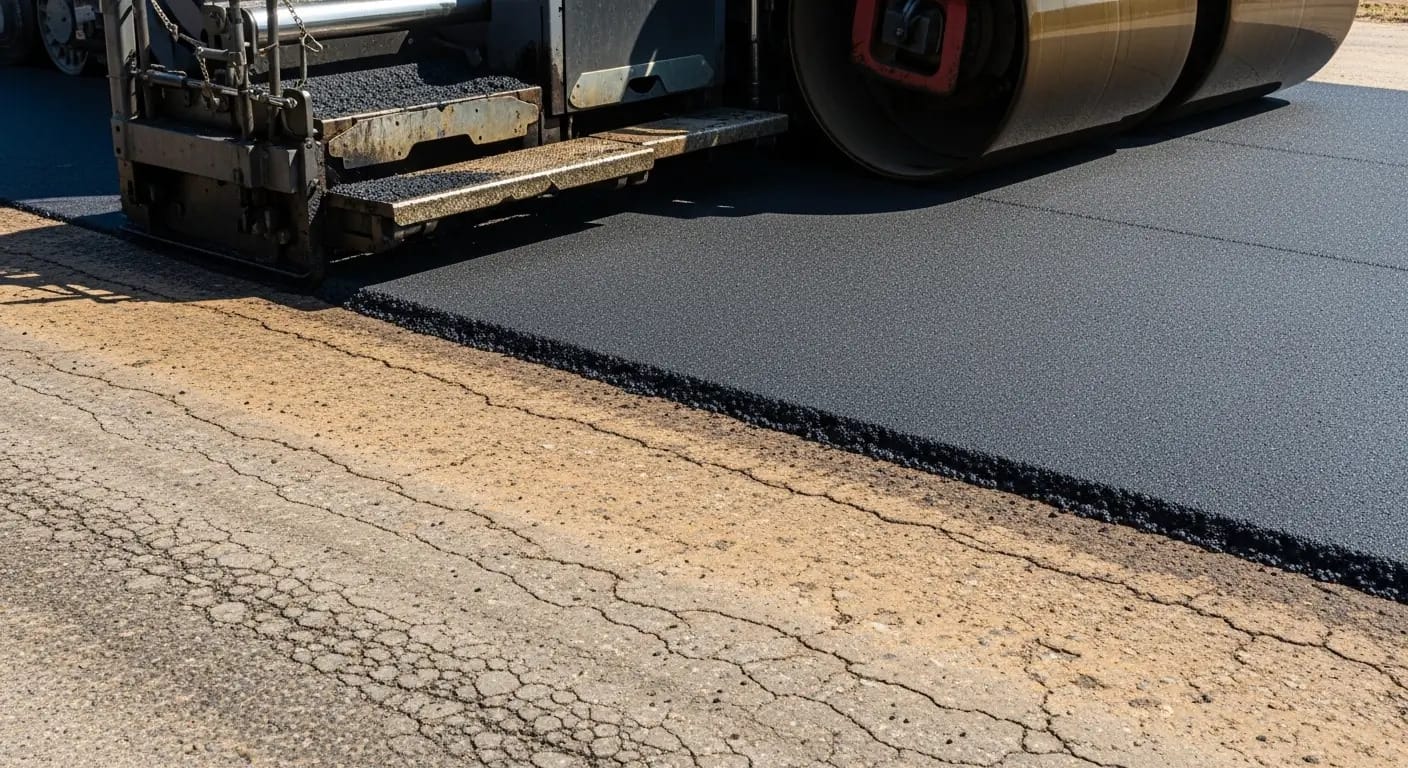
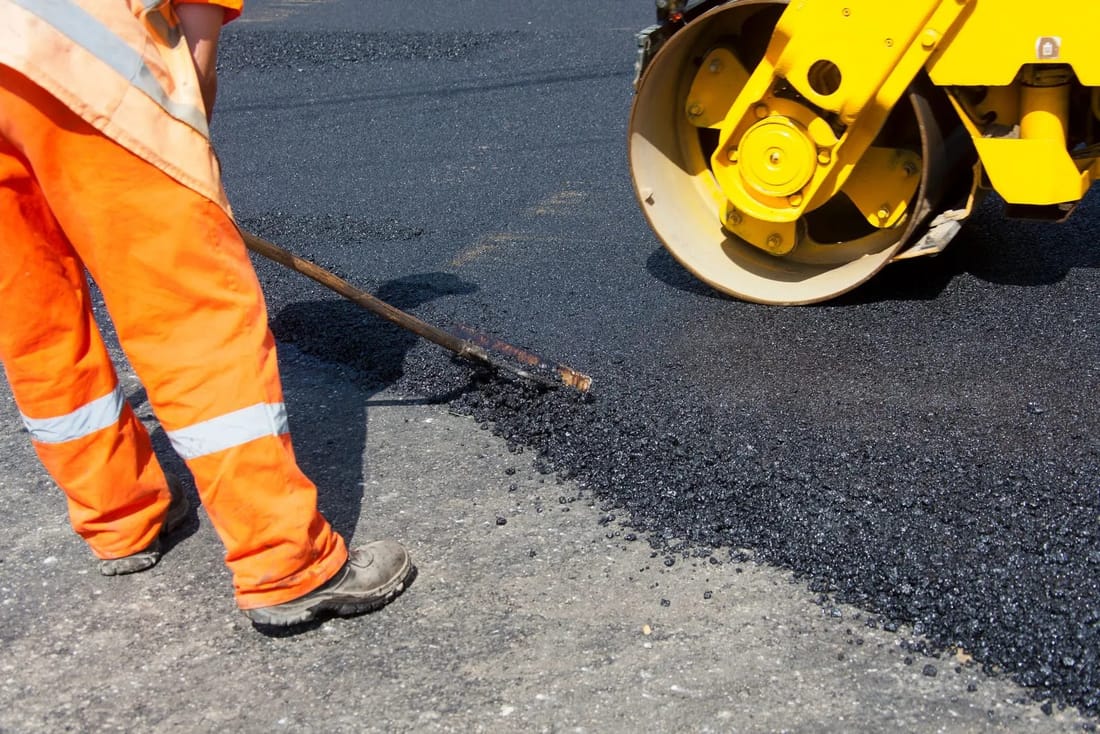
Before paving, we apply tack coat, a thin sprayed layer that bonds the new asphalt to the old surface. Skipping or skimping on tack is one of the biggest reasons overlays fail early. Then we place the new asphalt using commercial pavers, not just rakes and a dump truck. For most Boise commercial work, overlay thickness runs from 1.5 to 3 inches depending on traffic loads. We compact with steel drum and pneumatic rollers while the mix is still in the right temperature range, checking density and smoothness as we go.
Once the mat is cool enough, we re‑stripe parking stalls, ADA spaces, and traffic markings. If layout changes or new ADA paths are needed, we can adjust striping to bring the lot in line with current standards.
Design Options and Materials for Heavy Boise Use
Commercial asphalt overlays offer more choices than most property managers realize. Precision Asphalt Boise works with regional suppliers so we can fine tune the mix design for your site, not just use a default recipe. For heavy truck areas, loading docks, and dumpster pads, we typically specify a mix with a harder aggregate and a higher binder content, and we may increase thickness or recommend a partial reconstruction of those zones while using a standard overlay in lighter parking areas.
In office and retail lots, the priority is usually a smooth driving surface, clear striping, and good drainage. We often adjust crown and slope slightly during resurfacing by feathering the overlay thickness. This helps move water away from storefronts, landscaped islands, and ADA ramps that tend to settle over time. In Boise, where winter ice forms quickly in shaded low spots, addressing small drainage depressions during an overlay can reduce slip hazards and liability.
We also look at how your property actually functions. For example, if your main driveway off Eagle Road or Fairview sees continuous turning movements, we might suggest reinforcing that lane with a thicker mat or a modified binder that stands up better to rutting and shoving. For multi‑building office campuses or HOAs, we can phase work and adjust mix choices by section so fire lanes, mail kiosks, or trash truck routes get the additional structure they need.
On properties that want a darker, more uniform appearance for branding, we plan for a sealcoat 6 to 12 months after resurfacing, once the asphalt has cured. This timing is important. Sealing too early can trap oils and reduce the life of the overlay.
Cost Drivers and What Affects Your Overlay Price
The cost of commercial asphalt resurfacing in Boise is driven by more than square footage. Precision Asphalt Boise builds estimates line by line so you can see what is actually affecting your number. The main cost drivers are thickness of the overlay, existing base condition, milling and prep needs, and site access.
Overlay thickness has a direct impact on tonnage and therefore cost. A 1.5 inch overlay uses far less material than 3 inches across the same area. However, trying to save money by going too thin on a heavy‑use lot can cost more in the long run. We explain where thickness matters most, such as drive lanes and loading zones, and where it can sometimes be reduced.
Existing base condition is the second big factor. If your lot has large areas of base failure, we will recommend full‑depth repairs in just those sections before overlaying the entire surface. This adds some upfront cost, but it prevents reflective cracking and depressions from coming back through the new mat within a couple of freeze‑thaw seasons.
Milling requirements also affect pricing. Lots that tie into multiple concrete aprons, drain inlets, and city sidewalks typically need more detailed milling to keep elevations correct and avoid standing water. Boise City and Ada County Highway District care about how private lots shed water onto public streets, so we pay attention to flow lines at driveway cuts to avoid callbacks and drainage complaints.
Access and scheduling are often overlooked but important. If your property on Overland, Chinden, or State Street can only be paved in tight night windows or in many small phases, there is more setup and traffic control time per ton placed. For busy retail centers, we often stage work over several nights so you keep key drive aisles open during business hours. We price these options clearly so you can weigh operational impact against project cost.
What Boise Property Owners Should Know Before Hiring
Before you hire anyone for commercial asphalt resurfacing, it helps to understand where overlays are appropriate and where they are not. An overlay is a good option when the majority of the pavement is still bonded and the base is structurally sound. If you see wide, deep depressions that hold water, pumping of fines when trucks turn, or large areas where the asphalt is loose and rocking, you may need more than a surface fix. Precision Asphalt Boise points these spots out during the walkthrough and separates them on the proposal so you see exactly what is being resurfaced and what is being rebuilt.
Local requirements matter too. Within Boise city limits, commercial properties often have existing site plans tied to drainage and parking counts. When we re‑stripe after an overlay, stall sizes, drive aisle widths, and ADA counts must still meet the approved plan and current ADA standards. If you want to change layout significantly, like adding compact stalls or shifting accessible spaces, we can coordinate with your design professional so you stay in compliance.
Timing is another key decision. For most Boise properties, the best resurfacing window is late spring through early fall when overnight temperatures consistently stay above 50 degrees and daytime highs are not extremely hot. This produces better compaction and a longer lasting mat. We also look at your traffic patterns. For example, schools and churches often schedule work in the summer or midweek, while retail centers may prefer overnight work.
Finally, ask any contractor how they handle communication and phasing. On commercial overlays, clear access plans and signage are as important as the asphalt itself. At Precision Asphalt Boise, we provide a written schedule, staging map, and short tenant notices you can email or post so everyone knows which areas are closed and when they will reopen. This kind of planning reduces tenant complaints and helps the project finish on time and within the agreed scope.