Home › Asphalt Sealcoating & Crack Filling
Protect your driveway with professional asphalt sealcoating in Boise, ID. We clean the surface, fill cracks, and apply a rich, even sealer coat to shield against weather and wear. Regular sealcoating keeps your asphalt looking fresh and can delay costly repairs. Contact us today to schedule driveway sealcoating and maintenance.
Precision Asphalt Boise provides professional asphalt sealcoating throughout Boise, ID, ID and the surrounding area. Our licensed, insured crew delivers safe, clean, on-time work with a free estimate before anything begins. Call (208) 783-3122 or request your free quote.
Protecting Boise Pavement With Thoughtful Sealcoating
Boise’s mix of hot summers, cold nights, and winter deicer is rough on asphalt. At Precision Asphalt Boise, our asphalt sealcoating and crack filling service is built specifically for Treasure Valley conditions, not a one-size-fits-all product. We focus on preventing water and chemicals from getting into your pavement so it lasts longer and stays safer.
We work with homeowners, HOAs, churches, and local businesses across Boise, Meridian, and Eagle. For each property, we look at how the pavement is used, where water drains, how much shade it gets, and how old the asphalt is. A quiet cul-de-sac in Southeast Boise needs a different approach than a busy parking lot off Fairview, so we adjust our materials and application rates to match your actual use instead of just coating everything the same way.
Our goal is to help you get more years out of the asphalt you already paid for. Good sealcoating and crack filling can often push off expensive mill-and-overlay projects, which is especially important for HOAs and small businesses working within a budget. We explain what is worth saving, what sections are already too far gone, and we do it in plain language so you can make an informed decision.
Step-by-Step: How Our Asphalt Sealcoating Process Works
A clean surface and good timing are what make sealcoating last in Boise. We start every project with a site walk so we can identify oil spots, failed patches, drainage issues, and any areas that might need crack repair or pothole work before we even think about coating.
On sealcoat day, we begin with mechanical cleaning. We use power blowers, steel brooms, and, on commercial lots, rotary brooms to remove dust, sand from winter sanding, pine needles, and debris. In heavily used drive lanes, we often pressure wash or scrub with detergent where vehicles have leaked oil, then apply an oil spot primer so the sealer can bond.
Once the pavement is clean and dry, we mask off concrete, garage doors, curbs, and utility covers. For residential driveways we usually use a hand squeegee application so we can control the thickness near edges and garage doors. On larger parking lots we use spray rigs combined with squeegee equipment. We typically apply two coats in Boise’s climate. The first coat is worked into the surface to fill hairline texture, the second coat builds a uniform wear layer.
We monitor weather closely. Sealcoating requires dry pavement, no active rain in the forecast, and surface temperatures generally above 50°F. Spring and fall are good for daytime work, while in peak summer we often start early in the morning so the material does not dry too fast on the surface. After application we cone off the area and provide clear re-opening times so traffic does not damage the fresh sealer.
Professional Crack Filling: Stopping Water Before It Ruins Your Base
Crack filling is where a lot of the long-term protection happens. In Boise, water that seeps through cracks and freezes in winter expands and breaks apart the base rock under your asphalt. That is how small cracks turn into potholes. Precision Asphalt Boise focuses on routing, cleaning, and filling cracks correctly so the repair actually holds.
We start by evaluating the pattern of cracking. Straight-line cracks from normal aging respond well to hot crack sealing. Alligator or spiderweb cracking usually means the base has failed and crack fill alone may not be cost effective. For repairable cracks, we first clean them with forced air and, where appropriate, a crack router or saw to create a consistent reservoir so the material can move with the pavement.
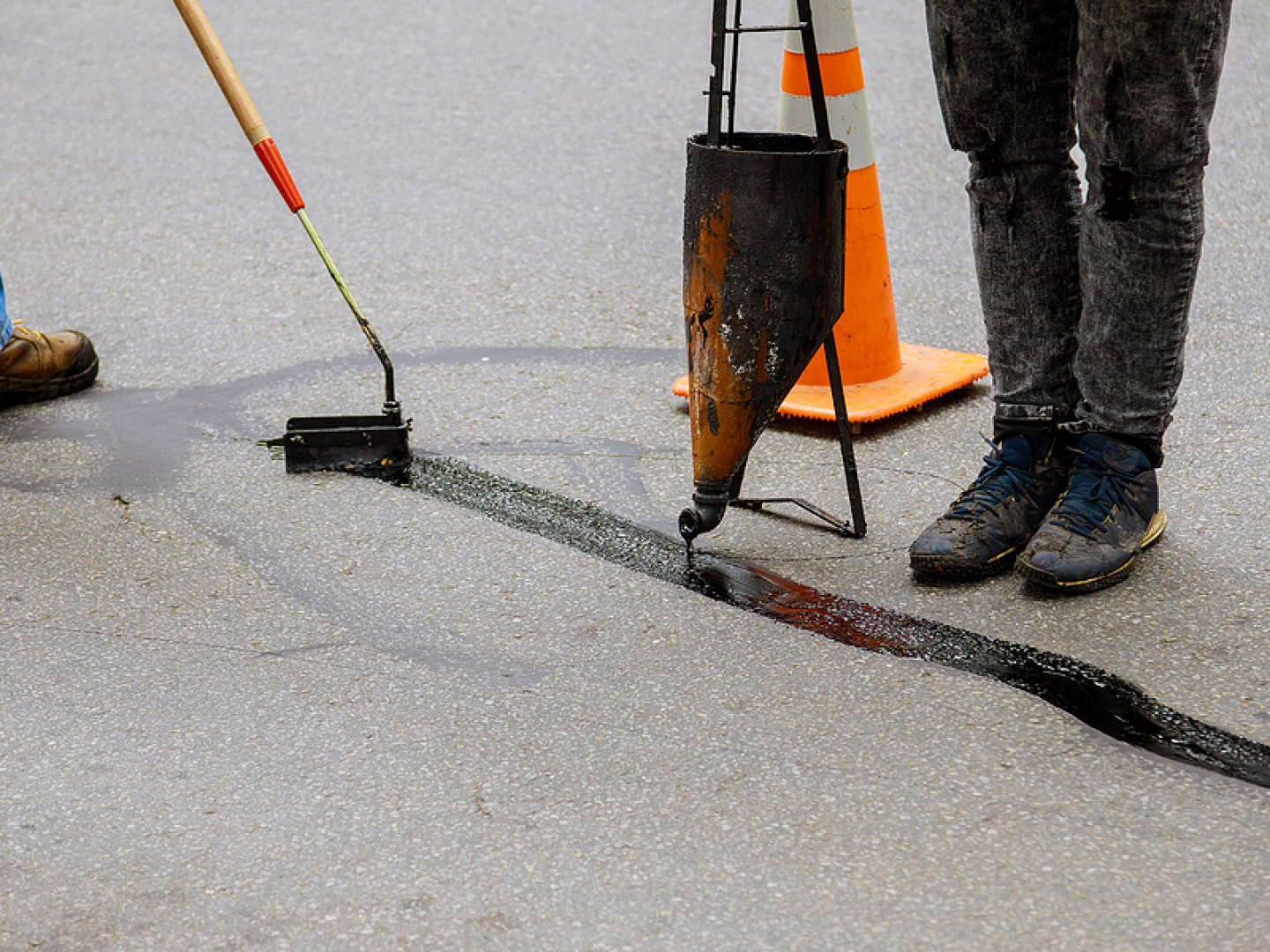
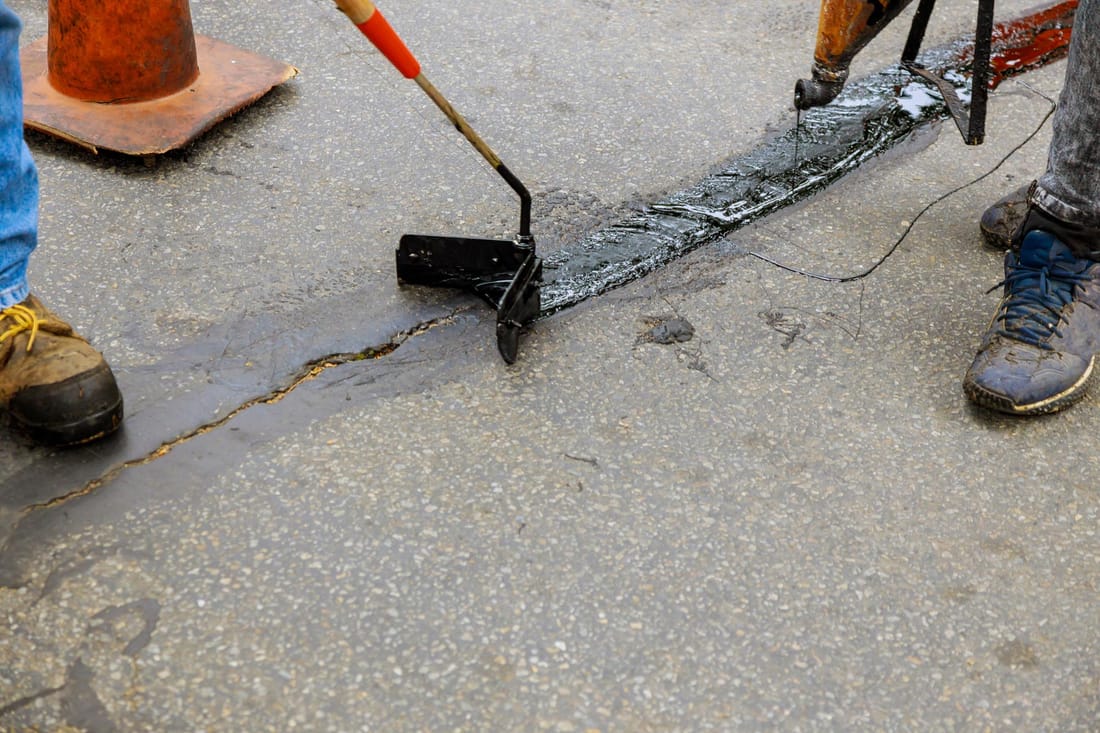
We then install a hot rubberized crack sealant using a heated kettle and hand wand. The material is applied slightly above the surface and then smoothed (or “banded”) to bridge the crack edges. This flexible sealant expands and contracts with Boise’s temperature swings and resists deicer and water. On residential driveways we keep the bands neat and narrow for appearance. On commercial drive lanes we may widen the band slightly for added durability.
When homeowners have tried cold crack fillers from big box stores, we often see those fail within a season. We remove the loose material as best we can before installing professional hot-applied material over a clean crack. This adds some labor but gives your sealcoat and underlying asphalt a much better chance to perform well.
Materials Tailored To Boise Conditions
Not all sealers perform the same way in Idaho’s high desert climate. Precision Asphalt Boise primarily uses refined tar or asphalt emulsion sealers that are blended with specific additives to handle UV exposure, traffic load, and deicer use. For residential work we often recommend an asphalt emulsion sealer with sand added. It creates a dark, rich finish without a strong odor and provides light texture for traction on sloped driveways.
On commercial sites, especially those with high traffic or frequent turning movements around drive-thrus and loading zones, we may recommend a more robust sealer blend with additional polymer modifiers and a higher sand load. This helps resist wear from power steering, delivery trucks, and snow plow edges. If your property uses a snow removal contractor, we can coordinate with them and explain how to adjust blade shoes or rubber edges to minimize damage.
Color is typically the classic dark black that most people expect, which helps with ice melt in winter and gives line striping good contrast. We can adjust the texture by changing sand content. More sand can improve traction near building entrances or slopes, which is helpful for Boise freeze-thaw days when surfaces can be slick in the morning and dry by afternoon.
We store and handle all materials according to manufacturer specifications and Idaho environmental regulations. This includes proper mixing, agitation, and dilution rates. We never over-dilute material to stretch coverage because that reduces lifespan and ends up costing you more in the long run.
Pricing, Scheduling, and What Affects Your Sealcoating Cost
Every asphalt surface is different, so we base pricing on a site visit rather than a flat per-square-foot number. The biggest cost drivers for asphalt sealcoating in Boise are total square footage, how many cracks and repairs are needed beforehand, how dirty or oily the surface is, and how easily we can access the area with equipment.
A newer driveway in Northwest Boise that mainly needs cleaning and a two-coat seal may be at the lower end of the range. An older commercial lot near downtown with heavy oil spots, lots of hand-detail work around islands, and significant crack filling will cost more per square foot. Scheduling also matters. If we can complete all work in one mobilization rather than splitting it over multiple days or phases, that keeps costs down.
For HOAs and multi-building properties, we often create a phased plan so you are not shutting down all parking at once. We mark off sections, coordinate with your property manager, and post notices so residents know where to park and when. This planning is included in our proposal, and we can attend HOA meetings to explain the schedule and answer questions.
We provide written, line-item estimates that separate crack filling, sealcoating, and any patching or leveling. That way you can see exactly where your money is going and make adjustments if needed. There are no surprise “trip fees” tacked on afterward if the scope matches what we reviewed on-site.
Local Considerations: Boise Weather, HOAs, and Access
Boise’s climate and local rules influence when and how we sealcoat. Because we rely on warm, dry surfaces, our main sealcoating season runs roughly from late April through early October, depending on the year. Early spring and late fall projects are scheduled around daytime highs, overnight lows, and the risk of overnight frost. We will not apply sealer if there is a good chance it will be damaged by cold or dew before it cures.
Within Boise city limits and Ada County, private residential driveways and existing commercial lots generally do not require a permit just for sealcoating and crack filling, since we are maintaining, not rebuilding, the pavement. However, if you plan to change traffic flow, add or remove parking stalls, or re-stripe ADA stalls, we may verify that your layout still complies with current fire lane and accessibility standards. For properties along busy roads, we can help coordinate any needed traffic control or work-hour restrictions.
HOAs in neighborhoods like Harris Ranch, Columbia Village, and Boise Bench often have specific rules about project timing, noise, and temporary parking. Precision Asphalt Boise can provide notice flyers, maps, and project timelines you can share with residents. For businesses, we can schedule work in off-hours or on weekends, and we can stage the work so at least one entrance remains open whenever possible.
We also keep an eye on nearby irrigation and landscaping schedules. Sprinklers must be off before and after sealcoating, and lawn crews need to avoid blowing debris onto the fresh surface. These small coordination steps prevent streaking, peeling, and other avoidable issues.
How To Prepare, What To Expect, and Long-Term Care
A smooth project starts with a little preparation. Before our crew arrives, we ask that you remove vehicles, trailers, and portable basketball hoops from the work area and nearby edges. If you have automatic sprinklers, set them to stay off for at least 24 hours before and after the scheduled work. For commercial properties, we recommend notifying tenants and posting temporary signs a few days in advance, which we can help provide.
On the day of service, our lead will check in with you or your site contact, confirm the work area and access points, and review the reopening times for driving and parking. Foot traffic can usually return sooner than vehicle traffic. In most Boise summers, driveways and light-use areas can handle cars after about 24 hours, while heavy traffic lots may need up to 48 hours. Cool or overcast weather can extend those times slightly.
After the work is complete, your asphalt will look very dark and may show tire marks more easily during the first few weeks. This is normal while the surface cures. Avoid sharp turning in one spot, using kickstands on hot days, or dragging heavy objects across the surface during this curing period. We also recommend keeping oil leaks cleaned up since they can soften any asphalt surface over time, even one that has been sealed.
For long-term care, most Boise properties benefit from sealcoating every 3 to 4 years, with annual or biannual crack inspections. Heavily used commercial lots may need attention more often. Precision Asphalt Boise can put you on a maintenance calendar and check in before each season so you do not have to remember on your own. This regular care keeps your pavement in better shape and typically reduces large unexpected repair bills.