Home › Commercial Gravel-to-Asphalt Conversions
Upgrade your property with commercial gravel to asphalt conversions in Boise, ID. We transform dusty gravel lots and access roads into smooth, low maintenance asphalt surfaces. Our crews handle grading, base improvement, and paving sized for your traffic. Schedule a site visit and cost comparison for converting gravel to asphalt today.
Precision Asphalt Boise provides professional commercial gravel to asphalt throughout Boise, ID, ID and the surrounding area. Our licensed, insured crew delivers safe, clean, on-time work with a free estimate before anything begins. Call (208) 783-3122 or request your free quote.
Turn Your Gravel Lot Into a Reliable Asphalt Surface
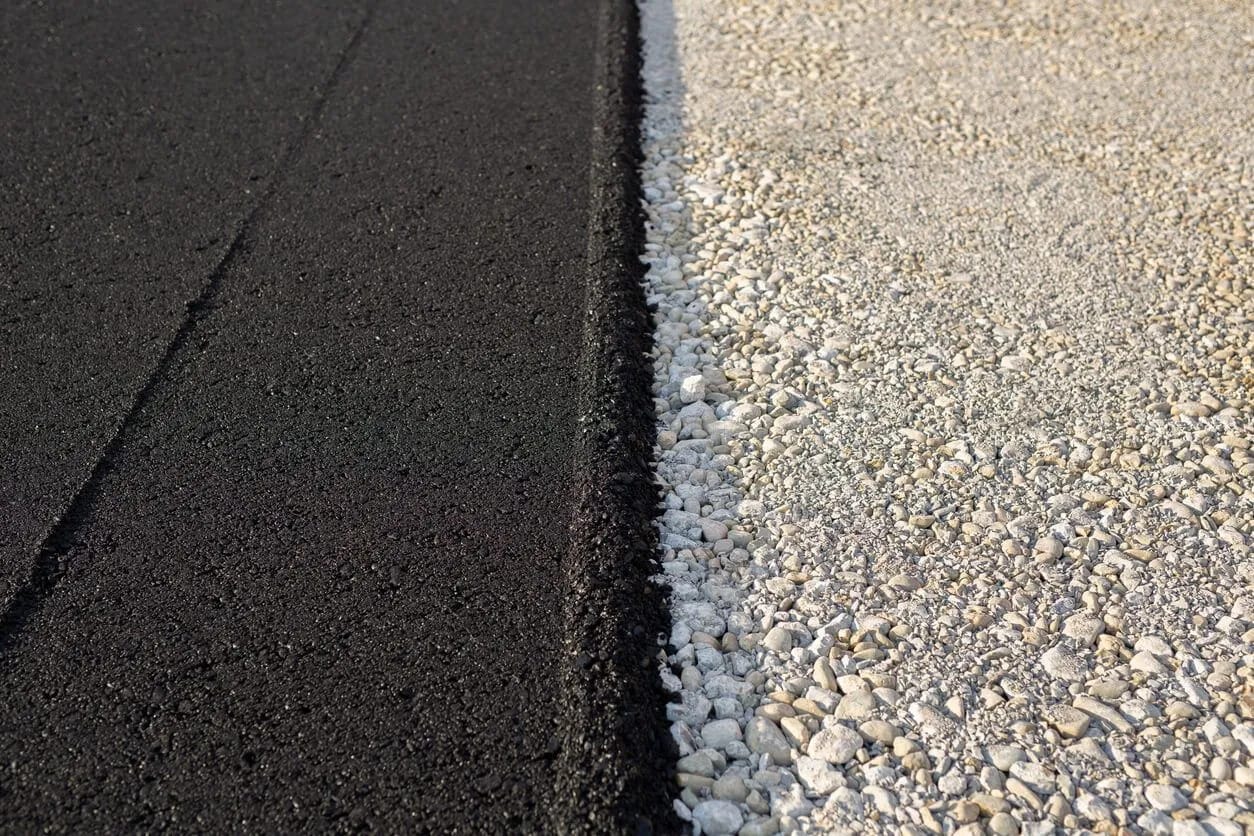
A gravel parking lot or drive lane might have worked when your Boise property was new, but as traffic increases, so do ruts, mud, and dust. Precision Asphalt Boise specializes in commercial gravel to asphalt conversions that upgrade rough aggregate surfaces into durable, lined, and properly drained asphalt lots that are easier to maintain and safer for customers and staff.
We work with retail centers, medical offices, warehouses, multifamily complexes, churches, and industrial yards throughout Boise, Meridian, Nampa, Eagle, and surrounding areas. Many of these properties were built in the 1970s through early 2000s with gravel overflow or back-lot parking. Our team understands how these older subgrades were built and what it takes to convert them successfully to long-lasting asphalt that meets current commercial expectations.
From initial site walk to finished striping, you get a clear plan for your commercial gravel to asphalt project, straight answers on cost, and a schedule that respects your business operations.
Site Evaluation Focused on Boise Soil and Drainage Conditions
A successful gravel to asphalt conversion starts with understanding what is under the gravel you already have. In Ada and Canyon Counties, we typically see a mix of compacted native soil, cobble, and fill that can vary a lot even across a single commercial property. Precision Asphalt Boise begins every project with a detailed site evaluation, not just a quick walk-through.
We check existing gravel depth and gradation, look for soft spots, ponding, and pumping under vehicle load, and identify areas where water from adjacent buildings or landscape beds is flowing across the future asphalt surface. In older Boise properties, we often find legacy drain lines or drywells that are partially working. We will locate these and decide if they can be reused, need to be extended, or should be replaced.
During this evaluation we also consider your traffic patterns: semi deliveries to the back dock, trash truck routes, outdoor storage areas, and high-turnover customer parking at the front. These real-world use patterns influence asphalt thickness, base preparation, and where we reinforce turning or loading zones. The result is a conversion plan that is tailored to Boise conditions and to how your site actually functions day to day.
Base Preparation: Turning Loose Gravel Into a Stable Foundation
The most important part of commercial gravel to asphalt work is the base underneath the blacktop. Precision Asphalt Boise does not simply pave over loose stone. We reshape, reinforce, and compact your base so the new asphalt can handle years of freeze-thaw cycles and heavy vehicles.
Typical steps include stripping off organic material or unsuitable fill, then regrading the existing gravel to achieve proper slopes away from structures and toward catch basins or swales. If your current gravel layer is too thin or contaminated with fines and mud, we bring in additional crushed aggregate base (often 3/4 inch minus) and build it up to the required depth, usually 4 to 8 inches for standard commercial parking, thicker in truck or loading areas.
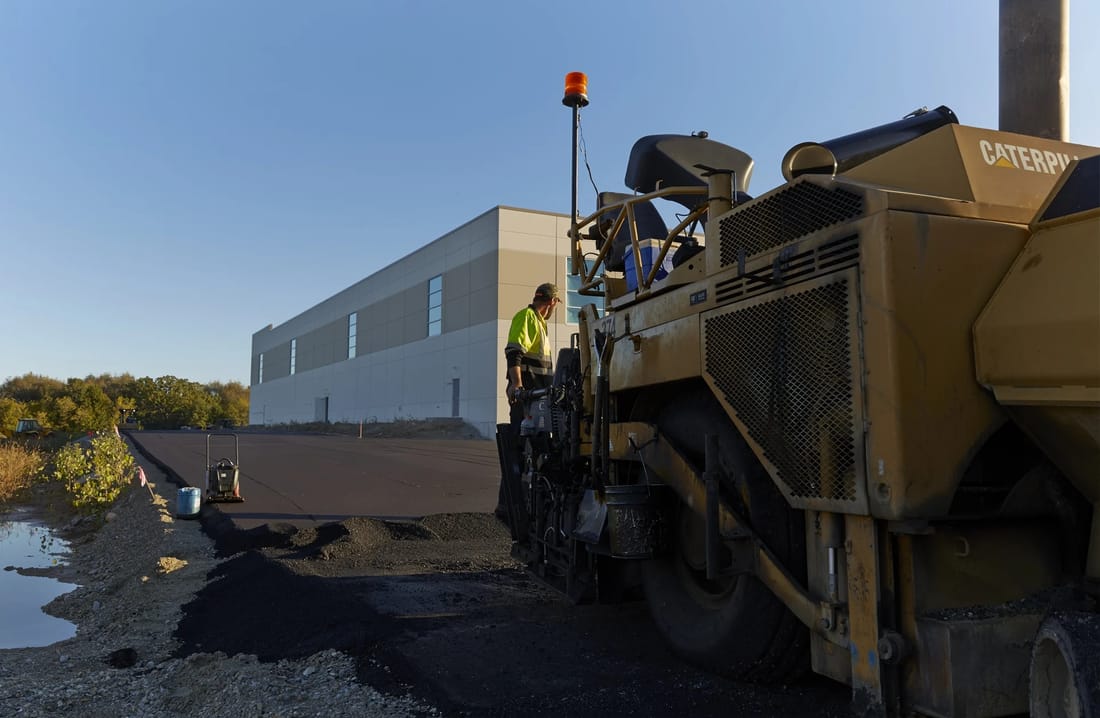
We use heavy rollers and plate compactors around tight areas to reach specified compaction levels, checking with density tests as needed on larger projects. Soft areas are undercut and replaced with stronger aggregate or, for very poor soil pockets often found near older downspout outlets, with geotextile fabric and imported base. In Boise’s clay-prone sections, we may add a stabilization layer or use a more open-graded base to help water move to designed drainage points.
By the time we are ready to pave, your gravel lot is no longer a loose surface. It is a shaped, compacted, engineered base designed specifically to support your new asphalt.
Asphalt Design Options for Different Commercial Uses
Not every commercial gravel to asphalt conversion uses the same asphalt mix or thickness. Precision Asphalt Boise designs pavement sections based on the kind of traffic your property sees and the appearance you want.
For typical office and retail parking with passenger vehicles, we often install 3 to 4 inches of hot mix asphalt in one or two lifts over a properly prepared base. For industrial yards, multifamily complexes with frequent garbage truck access, or properties that regularly see delivery semis, we increase the asphalt thickness, upgrade the base, or both. In the heaviest-use zones, such as dumpster pads or tight turning radii, we may recommend thicker asphalt or concrete pads tied into the asphalt.
We discuss surface finishes as well. A smoother surface is better for ADA routes and cart paths, while slightly more texture can help with traction in winter. For properties in Boise that are planning phased expansion, we can design the asphalt edges and joint locations so future additions tie in cleanly, rather than leaving awkward bumps or mismatched grades.
Color, sealcoat timing, and striping layout are also part of the design conversation. While standard black asphalt is most common, early planning for sealcoating and line striping helps maintain a clean, professional look that matches your building and branding over time.
Drainage, Winter Performance, and Common Local Problems
Water is the main enemy of pavement in Idaho. Our conversions are engineered so that when snow melts or a summer storm hits, water leaves the asphalt quickly instead of soaking into the base. During layout, Precision Asphalt Boise sets consistent slopes, typically 1.5 to 2 percent, toward catch basins, swales, or edges that can handle surface runoff.
If your existing gravel lot already has low spots that turn into ice rinks in winter, we identify and correct them during grading. Sometimes that means raising the center crown, sometimes it means installing new area drains, or tying in downspouts that currently dump directly onto drive lanes. We also check how neighboring properties and city streets interact with your site so you are not inheriting their runoff without planning for it.
Freeze-thaw cycles around Boise can cause cracking and potholes where water is trapped. To reduce this, we pay attention to base compaction, eliminate saturated zones, and ensure clean transitions at sidewalks, approaches, and existing asphalt. If your site connects to an older city approach or alley, we carefully mill or saw-cut those joints so the new asphalt bonds correctly and does not create a lip that plows or forklifts will catch.
By handling these localized issues during the conversion, your new asphalt lot is safer to plow, less likely to heave, and more predictable for tenants and customers during winter.
What Drives Cost and How We Keep Your Project Efficient
The cost of a commercial gravel to asphalt conversion in Boise is driven by a few key factors: total square footage, existing base condition, required asphalt thickness, drainage improvements, and site access. Precision Asphalt Boise walks you through each item so you understand where your budget is going.
If your gravel is deep, clean, and well compacted, we can often reuse a large portion of it as base, which keeps costs down. If we discover widespread soft soil, undocumented fill, or buried debris, some undercut and replacement will be necessary, and we will show you exactly where and why. Truck access, staging room for equipment, and how many mobilizations are required also affect pricing, especially in tight downtown Boise or older strip centers with active tenants.
We help control costs through careful phasing. Many businesses cannot shut down completely, so we often break the project into sections, keeping part of the lot open while we convert another. This reduces disruption and can allow work to occur during off-hours or weekends where appropriate. Clear upfront planning, straightforward change-order procedures, and accurate line-item estimates help you compare options, such as thicker asphalt in key areas versus broader base upgrades.
Our goal is to provide a pavement structure that fits your actual use and budget, instead of a one-size-fits-all package that either underbuilds or overspends.
How Precision Asphalt Boise Manages Your Conversion Project
From day one, you will know who to call and what is happening next. A project manager from Precision Asphalt Boise coordinates survey, layout, base preparation, paving, and striping so that your commercial gravel to asphalt conversion moves forward without surprises.
We start with a site meeting to confirm access points, loading zones, emergency routes, and special requirements unique to your business, such as clinic patient drop-offs, school pickup lines, or delivery schedules. Based on that, we produce a work sequence that keeps essential operations functioning while we convert the lot.
During construction, you will see clear barricades, temporary signage, and clean work zones. Our crews maintain edges around existing sidewalks, landscaping, and entries so your site still looks professional throughout the project. At completion, we handle line striping, ADA stalls and routes, fire lanes, and directional arrows so the lot is ready to use, not just paved.
Before we leave, we walk the site with you, review maintenance recommendations such as delayed sealcoating, crack sealing schedules, and snow plow blade settings, and answer any remaining questions. The result is a commercial gravel to asphalt conversion that performs well, looks finished, and is supported by a contractor who knows Boise conditions and stands behind the work.